








Trap Adventure 2 is a retro-style platform game built around unfair traps, sudden deaths, and memorizing danger through repeated attempts.

Here's a quick look at the game:
You guide a small character through stages that look simple at first, but almost every jump, block, and empty space can hide a surprise.
What You Do in the Game
Your goal is to move through each stage without getting caught by traps. The challenge is not only jumping over visible spikes or gaps, but learning what happens after you move.
A floor may collapse. A block may attack from above. A safe path may become unsafe after one step. The game rewards patience, memory, and careful testing more than speed.

Can You Play It Online?
The original TrapAdventure 2 is listed as an iOS game for iPhone and iPad. Browser versions may exist on game sites, but they are not clearly listed as the official original release.
If you are playing a web version, expect similar trap-platformer gameplay, but controls and level details may vary.
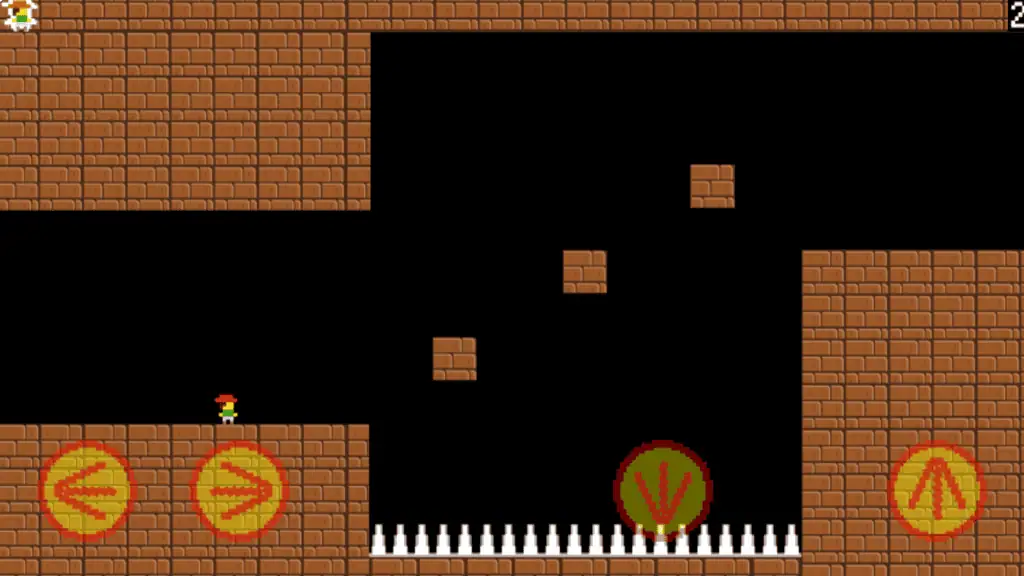
Controls
Controls depend on the version you play.
| Action | Control |
|---|---|
| Move | Left / Right buttons or arrow keys |
| Jump | Jump button or Up key |
| Crouch / Slide | Crouch button or Down key |
| Pause | Usually shown in-game |
On mobile, the game uses on-screen buttons. In browser versions, keyboard controls may be different, so check the in-game prompt first.
Tips for Surviving Longer
- Do not trust empty space. Pause before new platforms and watch for moving traps.
- Use short test runs. Move a little, trigger the trap, then restart with that knowledge.
- Memorize trap order. Many deaths are scripted, so the same danger can be avoided next time.
- Control jump height. Over-jumping can be just as dangerous as missing a jump.
- Slow down after a success. The game often places another trap right after a difficult section.
Why Players Keep Trying
Trap Adventure 2 is frustrating by design, but that is also the hook. Each death teaches you something, and each cleared section feels earned because you solved it through timing, memory, and stubbornness.